
Introduction – Wedding Planning Checklist
Getting engaged is one of the most joyful moments of your life. And then, very quickly, the questions start.
Where do we want to get married? How many people are we inviting? What is our budget? Who books the venue first — or the caterer? Do we need a wedding planner or can we manage this ourselves? How far in advance do we need to do all of this?
Wedding planning is genuinely exciting. It is also genuinely overwhelming if you do not have a clear structure to hold everything together. There are hundreds of decisions to make, dozens of vendors to coordinate, and a date that is not moving — no matter how long your to-do list gets.
That is exactly what this checklist is for.
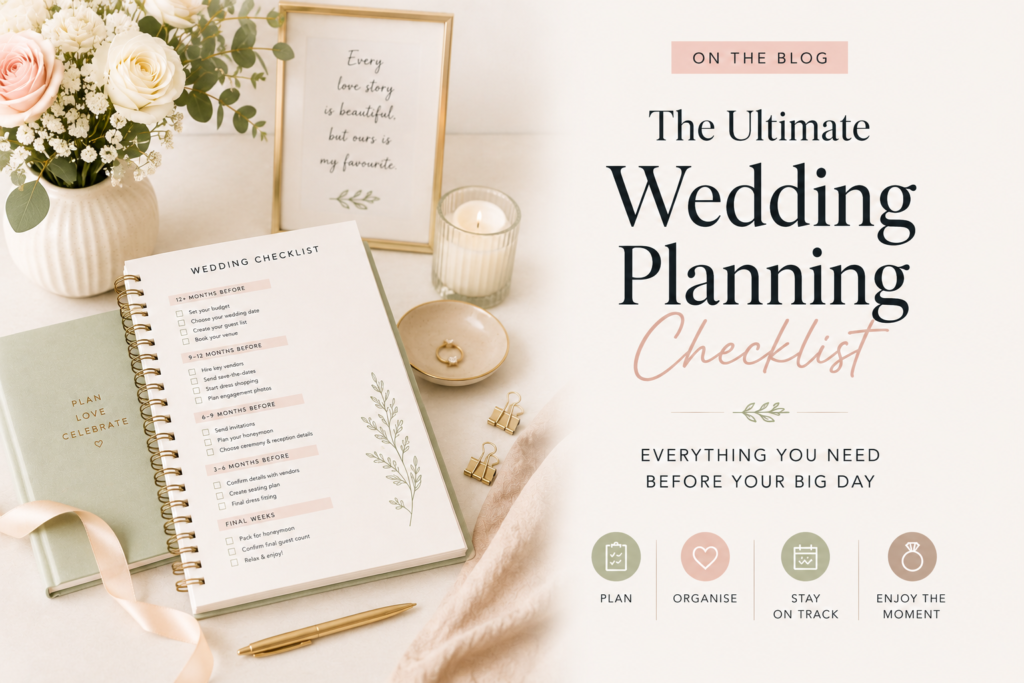
Whether you have twelve months to plan or you are working with a tighter timeline, this guide walks you through everything you need to do, in the right order, so nothing falls through the cracks. Read through the whole thing first to get the full picture, then use each section as your working checklist as you go.
Let us start from the beginning.
As Soon as You Get Engaged
The days right after your engagement are electric. Before the excitement settles into logistics, there are a few things worth doing immediately — because some of them will shape every decision that follows.
Announce your engagement. Tell the people closest to you before it goes anywhere on social media. Close family first, then friends, then your wider circle. This is a small thing that matters a lot to the people who love you.
Take a breath and enjoy it. Seriously. The planning will begin soon enough. Give yourself at least a week — ideally two — before you dive into spreadsheets and venue tours. This moment does not come back.
Have the big preliminary conversations with your partner. Before you book a single thing, you and your partner need to be aligned on the fundamentals. These conversations are not always easy, but having them early saves enormous friction later:
- How big do we want this wedding to be? Intimate gathering or large celebration?
- What kind of atmosphere do we want? Traditional, modern, rustic, destination?
- Who is contributing financially, and what does that mean for the decision-making?
- Are there any non-negotiables for either of us?
Set a rough budget. You do not need exact figures yet, but you do need a ballpark. Know how much you are working with in total before you fall in love with a venue that is three times over budget.
Start a wedding planning folder or binder. From this point forward, every quote, every contract, every vendor email, every inspiration image goes in one place. Physical or digital — just make sure it is organised and accessible to both of you.
12 Months Before the Wedding
If you have a year or more, you are in a comfortable position. Use this time wisely because the first few months set the foundation for everything else.
Choose your wedding date. Consider the season, the weather in your chosen location, any significant dates for your family, and — practically — when your most important guests can actually attend.
Book your venue. Venues are the single most time-sensitive booking in all of wedding planning. Popular venues in most cities and towns book out twelve to eighteen months in advance, sometimes longer. Once you have your date and rough guest count, this is your first priority.
Decide on your guest list. This decision directly shapes your budget, your venue requirements, and almost every other major choice. Be clear about who is on the definite list, who is on the potential list, and how you will handle any sensitive family dynamics around invitations.
Set your full wedding budget. Now that you have a venue in mind and a guest count, you can build a realistic budget across all categories — catering, photography, florals, music, attire, transport, stationery, and everything else. Be honest. Include a buffer of ten to fifteen percent for unexpected costs, because they will come.
Start researching photographers and videographers. Like venues, the best photographers in your area tend to book up fast. Start looking at portfolios, reading reviews, and shortlisting people whose style genuinely resonates with you. Do not wait on this.
Hire a wedding planner if you want one. If you are considering professional help, this is the time to bring them in — not six months before the wedding when half the decisions have already been made. A good planner saves you time, stress, and often money through their vendor relationships.
Begin your wedding dress or suit search. This feels early, but it really is not. Custom and bespoke options can take six to nine months from first fitting to final delivery. Even off-the-rack options often need alterations that take several weeks. Start looking now even if you are not ready to buy.
Create your wedding website. A simple wedding website gives guests a central place to find information — date, location, dress code, RSVP details, accommodation suggestions, and any other logistics. Many couples use free platforms for this.
Start collecting inspiration. Build a mood board — on Pinterest, in a folder, or in a physical scrapbook — for your overall aesthetic. Colours, florals, table settings, venue decor, invitation styles. This will guide every visual decision going forward and make conversations with vendors much easier.
9 to 10 Months Before the Wedding
Book your photographer and videographer. If you have been shortlisting, now is the time to confirm. Meet with your top choices in person or on a video call before booking. You will spend a lot of your wedding day with these people — make sure the personalities fit.
Book your caterer. If your venue provides in-house catering, arrange your tasting and initial menu consultation. If you are bringing in an external caterer, begin the search now. Catering is one of your largest costs and one of the things your guests will remember most clearly.
Book your music — band or DJ. Live bands especially tend to book up well in advance. If you have a specific band in mind, do not assume they will be available. Check and confirm early.
Research and shortlist florists. Look at portfolios, attend any local bridal shows where florists are exhibiting, and get initial quotes. Florals have a wide price range depending on the flowers you choose and the scale of the arrangements.
Plan your honeymoon. If you are planning to travel immediately after the wedding, begin researching destinations, checking passport validity, looking at visa requirements, and booking flights and accommodation. International travel in particular needs early planning.
Send save the dates. Especially important if many of your guests will be travelling from out of town or internationally. Save the dates can go out nine to twelve months before the wedding for destination events, or six to eight months for local weddings.
Begin planning your ceremony. Talk to your officiant, religious institution, or registrar about what is required. Understand what personal elements — vows, readings, music — you can incorporate and start thinking about what matters most to you in the ceremony itself.
6 to 8 Months Before the Wedding
Send your formal invitations. Traditional etiquette suggests invitations go out six to eight weeks before the wedding, but for weddings with many out-of-town guests or during busy travel seasons, earlier is better. Include RSVP details and a clear deadline.
Finalise your wedding party. Confirm your bridesmaids, groomsmen, ushers, flower girls, and anyone else in a formal role. Discuss their attire and any costs they will need to cover so there are no surprises.
Book hair and makeup artists. Good bridal hair and makeup artists book up quickly, particularly on popular weekend dates. Arrange a trial as part of the booking — you want to see the finished look well before the wedding day.
Order wedding favours and stationery. This includes your table menus, place cards, order of service booklets, and any decorative signage. Custom stationery and favours often take four to six weeks to produce and deliver.
Register for wedding gifts. Create a wedding gift registry across one or two retailers, or set up a honeymoon fund if you would prefer experiences over objects. Share the registry link via your wedding website and include it in your invitations or on a separate card.
Book accommodation for the wedding night and nearby options for guests. Block book a set of rooms at a nearby hotel for out-of-town guests if possible — this takes the burden of finding accommodation off them and keeps your guests close for the celebrations.
Arrange wedding transport. Whether you want a classic car, a vintage bus for guests, or simply a plan for how you are getting from the ceremony to the reception, confirm the logistics now.
Plan your rehearsal dinner. If you are having a rehearsal of the ceremony the evening before (which is particularly common for larger or more elaborate weddings), decide who is invited and where it will take place.
3 to 4 Months Before the Wedding
Confirm all vendor bookings and review contracts. Go through every contract you have signed. Check dates, times, locations, payment schedules, and cancellation clauses. Flag anything that needs clarification and get answers in writing.
Chase outstanding RSVPs. Your RSVP deadline has probably passed or is approaching. Follow up personally with anyone who has not responded — you need firm numbers for your caterer and venue.
Finalise your catering numbers and menu. Once you have your confirmed guest count, work with your caterer to finalise the menu choices, confirm dietary requirements and allergies, and settle on the final headcount.
Buy or finalise your wedding rings. Custom rings can take eight to ten weeks to make. Even if you are buying ready-made rings, leave time for sizing and any engraving.
Start writing your vows if you are personalising them. If you are writing personal vows rather than using standard ceremony wording, give yourself time. This is not something you want to rush or leave to the night before.
Plan your wedding day timeline. Work backwards from your ceremony time. Map it out in detail and share it with your key vendors, your wedding party, and your family.
Arrange a final dress or suit fitting. By this stage you should be close to your final body shape for the wedding. Schedule your penultimate fitting and flag any final alterations needed.
Sort out any legal requirements. Marriage licences, notices of marriage, or any other legal documentation varies by country and region. Check exactly what is required in your location and make sure everything is in order well before the date.
1 to 2 Months Before the Wedding
Confirm final details with every vendor. Call or email each vendor — photographer, caterer, florist, band or DJ, transport, hair and makeup — to reconfirm the date, time, location, and any outstanding decisions. Do not assume everything is fine just because you booked them months ago.
Prepare your final seating plan. With your confirmed guest list in hand, arrange your seating. Consider dynamics carefully — who gets on well, who might need to be kept apart, which guests do not know many people and might need to be placed near friendly faces.
Assign roles to people you trust. You cannot be in two places at once on your wedding day. Assign a trusted friend or family member to handle specific responsibilities — greeting vendors, managing the timeline, holding onto emergency supplies, coordinating the wedding party.
Prepare an emergency kit. Pack a small bag with the things that might be needed on the day: safety pins, stain remover, pain relief, blister plasters, touch-up makeup, a small sewing kit, extra bobby pins, phone charger, breath mints. Give it to your maid of honour or best man.
Collect your final dress or suit. Final fitting, final adjustments, and bring it home. Keep it somewhere clean, hung properly, and well away from small children and pets.
Prepare your payments and tips. Many vendors expect final payment on the day or shortly before. Prepare envelopes with the correct amounts and assign someone to distribute them so you are not handling money on your wedding day.
Write and practise your speech if you are giving one. Whether it is a toast at the rehearsal dinner, a thank-you at the reception, or a personal moment during the ceremony, write it out and say it aloud at least a few times. Knowing it well means you can be present in the moment rather than reading from a piece of paper.
The Week Before the Wedding
Reconfirm everything one final time. A quick call or message to each vendor confirming tomorrow or this week. It takes twenty minutes and eliminates the kind of last-minute surprises that should not happen but occasionally do.
Pack for your honeymoon. If you are leaving soon after the wedding, pack in advance so you are not doing it at midnight on your wedding night or in a panic the morning after.
Get a good night’s sleep. This is easier said than done, but it matters. The week before a wedding tends to fill up with final errands, family arrivals, and pre-wedding events. Protect your sleep as much as you can.
Eat properly. Weddings tend to be long days. Make sure you eat a proper meal before the ceremony — it is very easy to go hours without eating when you are caught up in the excitement and the photographs.
Spend time with your partner. In the chaos of the final week, it is easy to lose each other to logistics. Find a quiet hour or an evening to just be together — to remember why all of this planning exists in the first place.
Deliver items to the venue. Any decor, favours, signage, or personal items that need to be set up at the venue should be delivered and arranged, ideally the day before.
Attend your rehearsal. Walk through the ceremony with your wedding party, your officiant, and anyone with a specific role. Even a simple rehearsal removes the uncertainty and nerves that come from doing something significant for the first time.
Your Wedding Day Checklist
The day is finally here. Keep this short and simple:
- Wake up at the time your timeline requires — not earlier, not later
- Eat breakfast, even if nerves make it difficult
- Keep your phone nearby but do not spend the morning scrolling
- Follow your hair and makeup timeline — do not let it run over
- Have someone responsible for keeping the day on schedule so you do not have to
- Take a quiet moment alone, or with your partner if tradition allows, before the ceremony
- Hand your phone to a bridesmaid or groomsman during the ceremony
- Be present — the photographs are being taken, the memories are being made, and this day will not come again
- Eat at the reception — you worked hard for this meal
- Dance, celebrate, and enjoy every single moment of the evening
After the Wedding
The planning does not quite end when the party does.
Send thank-you notes. Handwritten notes to every guest who gave a gift, and to your key vendors, go a long way. Try to send them within four to six weeks of the wedding.
Return any hired items. Any rented decor, suits, or equipment needs to go back on time to avoid additional charges.
Preserve your wedding dress. If you want to keep your dress, have it professionally cleaned and boxed for preservation as soon as possible after the wedding.
Back up your photos. As soon as your photographer delivers your images, back them up in at least two places — cloud storage and an external hard drive.
Change your name if applicable. If you are changing your name, begin the process with your passport, driving licence, bank accounts, and any other official documents. It is a longer process than most people expect.
Enjoy your honeymoon. You planned a beautiful wedding. Now leave it all behind for a little while and just be married.
Keeping It All Together: The Case for a Wedding Planner Tool
Reading through a checklist this detailed makes one thing clear very quickly: wedding planning involves a staggering number of moving parts, spread across twelve or more months, involving dozens of people and vendors, all converging on a single irreversible date.
Keeping all of that in your head is not realistic. Keeping it across a collection of different notebooks, apps, and sticky notes is frustrating. What you need is one organised place where your timeline, your vendor contacts, your budget, your guest list, and your day-of schedule all live together.
A dedicated wedding planner or planning bundle does exactly that. It gives your biggest life event the structure it deserves — and it gives you the mental space to actually enjoy the process rather than just survive it.
Because planning a wedding should feel joyful, not just stressful. With the right tools and the right checklist, it genuinely can.
Frequently Asked Questions
How far in advance should you start planning a wedding?
Ideally, twelve to eighteen months before your date. This gives you enough time to secure the best venues and vendors before they book up, spread costs over a longer period, and make decisions without constant time pressure. That said, beautiful weddings happen with shorter timelines — six months is very manageable with focus and flexibility.
What should be booked first when planning a wedding?
Your venue. Everything else — the date, the guest count, the catering, the photography — flows from the venue. Popular venues book up faster than any other wedding supplier, sometimes more than a year in advance. Securing your venue is always the first concrete step.
How do you create a wedding budget?
Start with your total available amount, then allocate percentages to each category. A common rough split is: venue and catering (40–50%), photography and videography (10–15%), florals and decor (8–10%), music (5–8%), attire (8–10%), stationery and favours (2–3%), and a buffer of 10–15% for miscellaneous costs. Adjust based on your personal priorities.
Do you need a professional wedding planner?
Not necessarily — many couples plan beautiful weddings entirely themselves. A professional wedding planner is most valuable if you have a complex event, limited free time, or are planning a destination wedding. A middle ground is a “day-of coordinator” who manages logistics on the wedding day itself, leaving you free to enjoy it.
What is the most commonly forgotten thing in wedding planning?
Emergency supplies on the day. A small kit with safety pins, stain remover, blister plasters, pain relief, and touch-up makeup can quietly save the day in ways that nothing else can. Also frequently forgotten: eating breakfast on the wedding morning, and building buffer time into the day-of schedule for the inevitable small delays.