
Introduction
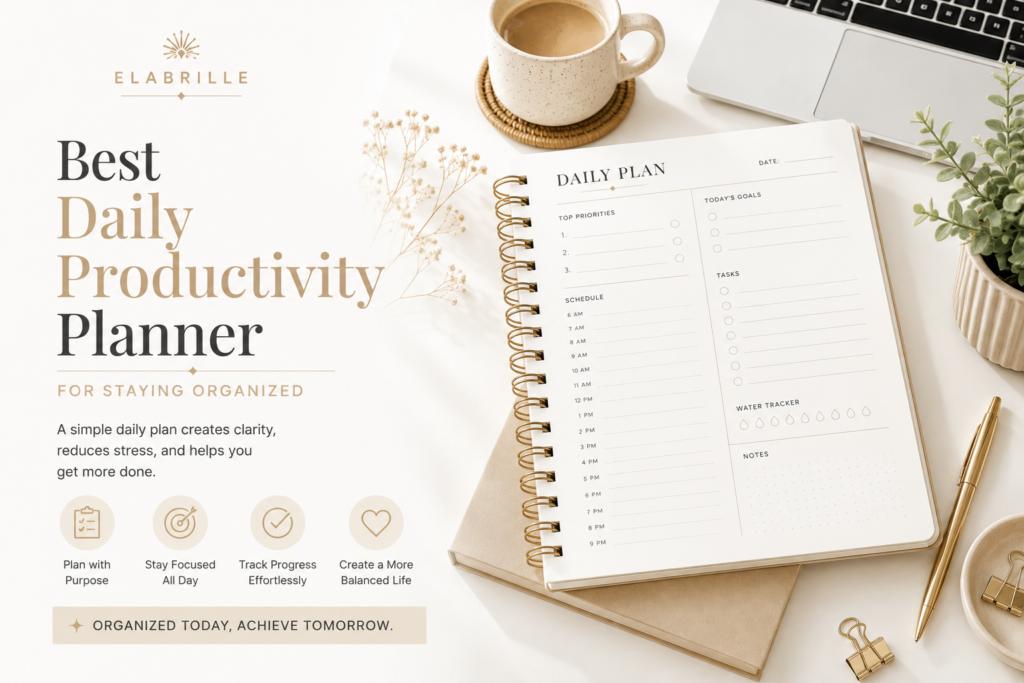
A genuinely effective daily productivity planner is a different kind of object entirely. It is built around how people actually think, plan, and get things done — not around what looks impressive in a product listing. Choosing the right one, and understanding what separates an effective planner from an abandoned one, makes a significant difference in whether the planner you buy this time actually becomes part of your daily routine.
This guide covers exactly what to look for in a daily productivity planner, the specific features that separate genuinely useful planners from decorative ones, and how to match a planner to your particular working style so that it survives well past the initial enthusiasm of a fresh start.
Why Most Planners Get Abandoned
Before looking at what makes a planner effective, it is worth understanding why so many perfectly well-designed planners end up unused. The reasons are consistent enough to be genuinely predictable.
The layout does not match how the person actually thinks. Some people think in lists. Others think spatially, in blocks of time. Others need extensive space for notes and context.
There is too much structure, or too little. An overly rigid planner, with a fixed slot for every hour of every day, feels suffocating to people who need flexibility.
It tries to do too much at once. Some planners attempt to combine daily planning, habit tracking, goal setting, meal planning, budgeting, and journaling into a single, dense format that becomes overwhelming to maintain consistently, particularly for someone new to structured planning.
A genuinely effective planner avoids these traps by design, not by accident.
The Core Features of an Effective Daily Productivity Planner
A Clear Space for Top Priorities
The single most important feature of any daily planner is a dedicated, prominent space for identifying your most important tasks — not buried among a long, undifferentiated list, but clearly separated and visually emphasised. This is what allows a planner to actually guide behaviour rather than simply recording it. Look for a layout with a clear “top priorities” or “most important tasks” section positioned prominently, typically at the top of the day.
Time-Based Structure, Not Just a List
While a simple task list has its place, the most effective daily planners include some form of time-based structure — whether a full hourly schedule or simply space to assign rough time blocks to your key tasks. This structure is what separates an aspirational wish list from an actual, actionable plan for the day.
Enough White Space for Genuine Notes
A planner packed edge to edge with pre-printed sections, with no room for the unpredictable notes, ideas, or context that any real working day generates, quickly becomes limiting. Sufficient white space for genuine flexibility is a mark of thoughtful design, not wasted space.
A Habit Tracking Section
A planner that includes a simple, integrated habit tracker keeps these two dimensions connected, rather than requiring a completely separate tool.
A Weekly Overview, Not Just Daily Pages
A planner made up entirely of isolated daily pages, with no way to see the broader shape of the week, makes it difficult to plan strategically or spot scheduling conflicts in advance. A genuinely effective planner includes some form of weekly view, even a simple one, alongside the daily pages.
Reflection or Review Prompts
The most effective planners include brief, built-in prompts for reflection — a short end-of-day or end-of-week review section. This small addition is what turns a planner from a purely forward-looking tool into one that also supports genuine learning and improvement over time.
A Format That Matches Your Actual Life
Beyond specific features, the format itself needs to fit realistically into your life. A beautifully designed planner that requires twenty minutes each morning to fill in completely will not survive a genuinely busy season, regardless of how good its individual features are.
Matching a Planner to Your Working Style
Different people, with genuinely different working styles, benefit from meaningfully different planner structures. Understanding your own style helps you choose a planner far more likely to actually stick.
You think in clear, sequential lists: A planner with a straightforward daily task list, ordered by priority, with minimal additional structure, likely suits you better than an elaborate time-blocked format that feels like unnecessary overhead.
Yes your day is highly meeting-driven: A planner with a strong time-blocking or hourly schedule component helps you see clearly where genuine focus time exists between fixed commitments, and helps protect it deliberately.
If you tend to feel overwhelmed by open-ended pages: Look for a planner with more built-in guidance and structure — clear prompts, defined sections — rather than a minimalist format that leaves too much of the structure entirely up to you.
If you value flexibility and dislike rigid systems: A planner with generous white space and a looser daily structure, rather than a tightly time-blocked hourly format, is likely to feel more sustainable and less restrictive over time.
Habits are your primary focus, more than task management: Prioritise a planner with a substantial, well-designed habit tracking section, rather than one that treats habit tracking as a minor afterthought squeezed into a small corner of the page.
We are managing both personal and professional priorities together: Look for a planner explicitly designed to hold both categories clearly, rather than one implicitly designed around work tasks alone, which can make personal priorities feel like an afterthought.
Printable Versus Bound: Which Format Serves Productivity Better
Beyond layout and features, the format of the planner itself — a bound, pre-dated book versus a printable template you print yourself — has real implications for how well it supports genuine productivity.
Bound planners offer a polished, cohesive physical object and a simple, consistent structure you do not need to set up yourself. Their primary limitation is inflexibility: if the pre-designed layout does not suit you, or if you need more pages of a particular section than the book provides, there is no way to adjust it.
Printable planners offer significant flexibility. You can print exactly the pages you need, in the format and quantity that suits your actual usage, and adjust your system over time as your needs change, without being locked into a single, fixed design purchased months in advance. This adaptability often makes printable formats particularly well-suited to genuine long-term productivity use.
For anyone building a productivity system for the first time, printable planners also offer a lower-risk way to experiment with different layouts before committing to a single format, since individual pages or sections can be tried and adjusted without the sunk cost of a full bound planner.
What to Look for in a Comprehensive Planner Bundle
Rather than a single, standalone daily planner, many people find that a comprehensive planners bundle — combining daily, weekly, monthly, and habit tracking components designed to work together — provides more sustained value than a single isolated tool.
Consistency of design across components. A bundle where the daily, weekly, and monthly pages share a cohesive visual language and consistent structure is easier to use fluidly than a mismatched collection of separately designed pages.
Genuine connection between sections, not just proximity. The best bundles are designed so that your monthly goals genuinely inform your weekly priorities, which in turn inform your daily tasks — a connected system, rather than several disconnected pages that happen to be sold together.
Enough variety to match different needs across your life. A comprehensive bundle that includes daily planning, habit tracking, goal setting, and space for reflection covers the range of what genuine productivity requires, rather than focusing narrowly on task management alone.
Room to grow into more advanced use over time. A good bundle includes enough depth that as your planning habits develop and mature, the system can grow with you, rather than being quickly outgrown within the first few months.
Elabrille’s planner bundles are built around exactly this kind of cohesive, connected structure — daily and weekly planning pages, integrated habit tracking, and goal-setting sections designed to work together as a single system rather than a loosely assembled set of separate tools.
How to Actually Start Using Your New Planner
Choosing the right planner solves only part of the problem. How you begin using it significantly affects whether it survives past the initial few weeks.
Start with just the core sections, not every feature at once. Even a well-designed, comprehensive planner can feel overwhelming if you attempt to use every single section fully from day one. Begin with your daily priorities and task list, and gradually incorporate additional sections — habit tracking, weekly review — once the core habit feels established.
Attach your planning session to an existing daily routine. Filling in your planner immediately after your morning coffee, or as part of an established evening wind-down, dramatically increases the likelihood of consistent use compared to a planning session with no clear, consistent trigger.
Keep it physically visible throughout the day. A planner left closed in a bag provides none of its intended benefit. Keeping it open on your desk, or in clear view during your working hours, allows it to function as the ongoing reference point it is designed to be.
Give it a genuine trial period before judging it. The first week of using any new planner often feels slightly effortful, simply because it is unfamiliar. A fair trial of two to three weeks provides a much more accurate picture of whether a particular planner and layout genuinely suits you than a single day’s impression.
Pulling It All Together
The best daily productivity planner is not the one with the most features, the most elegant design, or the highest price point. It is the one whose structure genuinely matches how you think, whose format fits realistically into your actual life, and which you can therefore use consistently — not just for the first enthusiastic weeks, but as a lasting part of your daily routine.
Look for clear prioritisation space, a sensible balance of structure and flexibility, an integrated approach to both tasks and habits, and a format — printable or bound — that suits your genuine working style. Then give it a real trial period, attached to an existing daily habit, before deciding whether it is the right long-term fit.
A planner that survives past January is not a matter of luck. It is a matter of choosing one genuinely designed around how real people plan, and using it in a way that fits naturally into a real, busy life.
Frequently Asked Questions
What makes a daily planner effective for productivity?
An effective daily planner includes a clear, prominent space for identifying top priorities, some form of time-based structure for scheduling key tasks, enough flexibility for genuine notes and context, an integrated habit tracker, a weekly overview alongside daily pages, and brief reflection prompts. Just as importantly, its format needs to realistically fit into your actual daily routine so it gets used consistently rather than abandoned after a few weeks.
How do I choose a planner that matches my working style?
Consider how you naturally think and plan: if you prefer simple sequential lists, choose a planner with minimal additional structure; if your day is meeting-heavy, prioritise strong time-blocking features; if you feel overwhelmed by open-ended pages, look for more built-in guidance and prompts. Matching the planner’s structure to your natural thinking style significantly increases the likelihood of consistent, lasting use.
What is the difference between a single planner and a planner bundle?
A single planner typically focuses on one function, such as daily task planning alone. A planner bundle combines multiple connected components — daily, weekly, monthly planning, habit tracking, and goal setting — designed to work together as a cohesive system. Bundles generally provide more comprehensive, sustained value, particularly for people looking to build a complete productivity system rather than a single isolated tool.
How long should I try a new planner before deciding if it works for me?
Give any new planner a genuine trial period of at least two to three weeks before making a final judgment. The first few days of using any new system often feel slightly unfamiliar and effortful simply due to the adjustment period, which can create a misleadingly negative first impression compared to how the system feels once it becomes more familiar.