
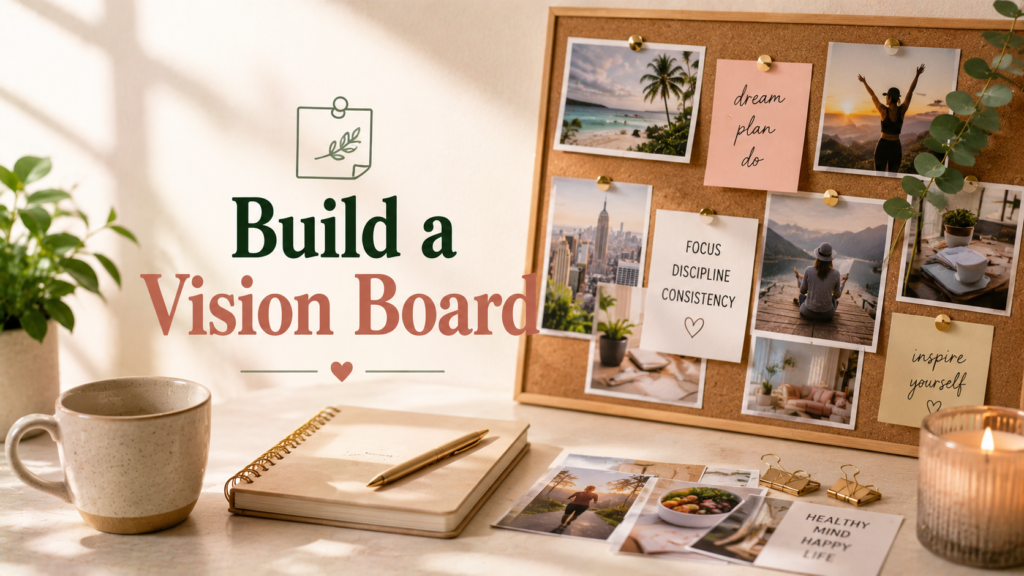
Vision boards occupy a slightly contested place in the broader conversation about goal setting. For some people, they represent a genuinely valuable tool — a visual, motivating reminder of what they are working toward. For others, they represent exactly the kind of aspirational exercise that feels meaningful in January and is entirely forgotten, unnoticed on a wall or in a drawer, by the time February arrives.
Both experiences reflect something genuinely true, and the difference between them usually comes down to how the vision board is actually built and used, not whether vision boards themselves are inherently effective or ineffective. A vision board built through genuine reflection, connected specifically to actionable goals, and kept in a place where it remains genuinely visible and revisited, functions considerably differently than one assembled quickly from appealing images with no deeper connection to an actual plan.
This guide covers how to build a vision board that genuinely reflects your real goals and actually supports your progress toward them, rather than becoming a forgotten piece of aspirational decoration.
Why Some Vision Boards Work and Others Do Not
A vision board built from genuine reflection on specific goals functions differently than one built from generally appealing images. Selecting images because they represent something you have genuinely, specifically decided to work toward produces a considerably more meaningful and motivating board than selecting images simply because they look appealing or aspirational in a general sense.
A vision board disconnected from any actual plan or system provides only the visual reminder, without any structural support for actually achieving what it depicts. As explored in the broader distinction between goals and systems, a vision board alone represents the goal side of this equation; without a corresponding system of specific actions, the board itself does relatively little to actually produce progress toward what it depicts.
A vision board that is not genuinely visible in daily life loses much of its intended function. A board created with real intention but then placed somewhere rarely seen provides considerably less ongoing benefit than one kept genuinely visible within your regular daily environment.
What Research Suggests About Visualization and Goal Achievement
Genuine visualization appears to work best when combined with concrete planning, not as a replacement for it. Research on goal-directed visualization suggests that imagining the process of achieving a goal — the specific steps involved — tends to be more effective than simply imagining the desired outcome in isolation, which can sometimes create a premature sense of satisfaction that actually reduces motivation to take genuine action.
This suggests a vision board is most effective when it represents not just outcomes, but also the process and identity connected to achieving them. A board depicting only end results, without any connection to the specific actions or identity shifts required to reach them, may provide less genuine motivational value than one that also reflects this process dimension.
Building a Vision Board Through Genuine Reflection
Step 1: Identify Your Actual, Specific Goals First
Before selecting any images, clarify your specific goals — ideally using a more structured process, such as a goal-setting worksheet, to ensure your vision board is built on genuine, well-defined intentions rather than vague, generally appealing aspirations.
Step 2: Consider the Process and Identity Connected to Each Goal, Not Just the Outcome
For each goal, reflect on what the process of achieving it genuinely involves, and what kind of person consistently takes the actions required. This process-and-identity dimension, alongside the outcome itself, provides a more complete, genuinely motivating representation than outcome imagery alone.
Step 3: Select Images and Words That Genuinely Represent Your Specific Goals
Rather than browsing generic inspirational image collections and selecting whatever appeals broadly, search specifically for imagery connected to your actual, defined goals. This specificity is what distinguishes a genuinely meaningful vision board from a generally aspirational collage.
Step 4: Include Elements Representing the Process, Not Just the Destination
Alongside outcome-focused imagery, consider including elements that represent the specific habits, systems, or daily actions connected to each goal — an image representing a specific daily practice, a symbol of the process itself, not only the eventual result.
Step 5: Arrange Your Board With Genuine Intention, Not Just Visual Appeal
While aesthetic considerations are not unreasonable, prioritize a layout that genuinely reflects your goals’ actual relative priority and connects related elements together visually, rather than arranging purely based on how the finished board looks as a decorative object.
Connecting Your Vision Board to an Actual System
Alongside your vision board, build the specific system or habits that will genuinely move you toward what it depicts. A vision board without a corresponding system remains purely aspirational; pairing it with the specific, concrete actions discussed in relation to systems-based goal achievement provides the structural support your vision board’s imagery alone cannot.
Reference your vision board during your regular planning sessions, not just as passive background decoration. Actively connecting your board to your weekly or monthly planning — checking whether your current actions genuinely align with what it depicts — keeps it functioning as a genuine tool rather than becoming visual wallpaper you eventually stop consciously noticing.
Revisit and update your vision board periodically as your goals genuinely evolve. A board built once and never revisited may become disconnected from your actual, current priorities over time; a periodic review ensures it remains genuinely reflective of what you are actually working toward.
Digital Versus Physical Vision Boards
A physical vision board, placed somewhere genuinely visible in your daily environment, provides passive, constant visibility that a digital version saved on a device does not automatically replicate. Unless a digital vision board is set as an actively visible background or similarly integrated into your regular environment, it can be easily forgotten in a way a physical board on a wall is less likely to be.
A digital vision board offers easier updating and modification as your goals evolve. Adjusting a digital board typically requires considerably less effort than physically reassembling a printed or collaged physical version, which may favor a digital approach for anyone whose goals shift relatively frequently.
Many people find genuine value in creating a physical vision board even if maintained relatively infrequently, specifically for the deeper reflection the physical creation process itself tends to encourage. The slower, more deliberate process of physically selecting, cutting, and arranging images often produces more genuine reflection than a faster digital assembly process, even though the digital version may offer more practical, ongoing flexibility.
What to Avoid When Building a Vision Board
Avoid selecting images purely for their aesthetic appeal, disconnected from any genuine, specific goal. This produces a visually pleasing but ultimately hollow board, providing decoration without the genuine motivational or clarifying function a well-built vision board can offer.
Avoid representing only distant outcomes without any connection to the process or identity required to achieve them. As discussed, this outcome-only approach may provide less genuine motivational value than a board that also reflects the process dimension.
Avoid placing your finished board somewhere it will rarely be seen. A board created with genuine intention but then stored away or placed in a rarely visited space loses much of its intended ongoing function.
Avoid treating the vision board as a complete goal-setting system on its own, without any accompanying concrete plan. A vision board works best as one component within a broader goal-setting approach, not as a standalone substitute for the specific planning and systems that actually produce progress.
Pulling It All Together
A vision board can genuinely support goal achievement, but only when built with real intention — connected specifically to well-defined goals, representing the process and identity involved rather than just distant outcomes, and paired with an actual system of concrete actions rather than standing alone as decoration. The difference between a vision board that provides genuine ongoing value and one forgotten by February comes down almost entirely to this deeper connection and the follow-through that surrounds it.
Start with genuine reflection on your specific goals, ideally using a structured process to clarify them first. Select imagery that genuinely represents both your desired outcomes and the process required to reach them. Keep your board genuinely visible in your daily environment. And, most importantly, pair it with the specific, concrete system that will actually move you toward what it depicts.
Frequently Asked Questions
Do vision boards actually work?
Research suggests visualization is most effective when combined with concrete planning, rather than used as a replacement for it. A vision board built from genuine reflection on specific goals, representing the process alongside the outcome, and paired with an actual system of concrete actions, provides considerably more genuine value than one assembled from generically appealing images with no deeper connection to a real plan.
What should I include on a vision board besides pictures of what I want?
Consider including elements that represent the process and identity connected to each goal, not just the desired outcome — imagery or symbols representing specific habits, daily practices, or the kind of person who consistently takes the actions your goals require. This process-oriented dimension tends to provide more genuine motivational value than outcome imagery alone.
Should I make a digital or physical vision board?
Both can work well. Physical boards, placed somewhere genuinely visible, provide passive, constant visibility that digital versions do not automatically replicate unless actively integrated into your daily environment. Digital boards offer easier updating as your yearly goals planner evolve. Many people find genuine value in the deeper reflection a physical creation process encourages, even if a digital version offers more practical ongoing flexibility.
How often should I update my vision board?
Revisit and update your board periodically as your goals genuinely evolve, rather than creating it once and never reconsidering it. A board that remains unchanged for years may become disconnected from your actual current priorities, reducing its genuine relevance and motivational value over time.
Why do most vision boards get forgotten so quickly?
This typically happens when a board is built from generally appealing imagery rather than genuine, specific goals, when it depicts only distant outcomes without any connection to an actual system of concrete actions, or when it is placed somewhere it is rarely actually seen. Addressing each of these specific issues considerably increases the likelihood a vision board remains a genuinely functional, ongoing tool.