
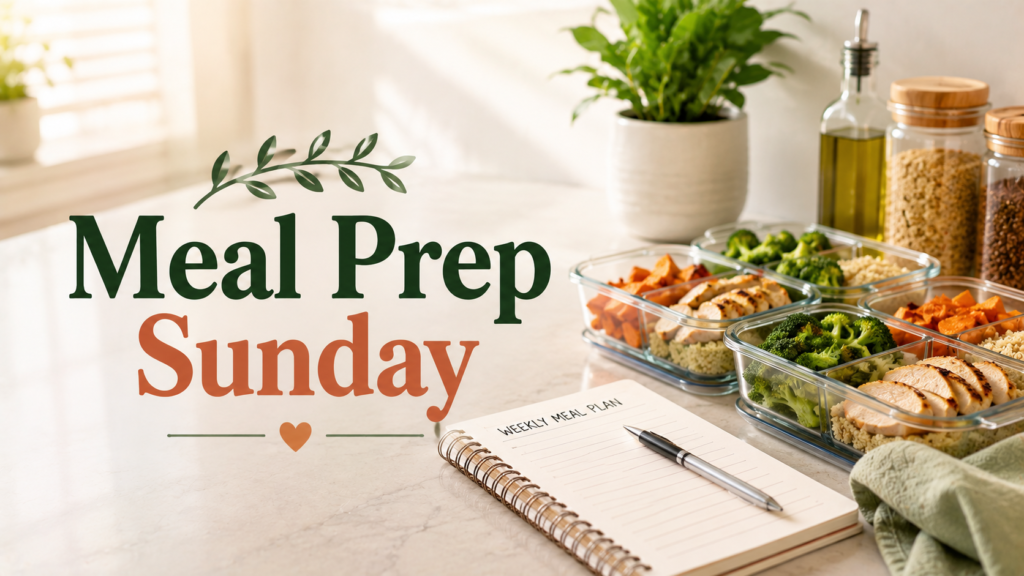
There is an important distinction worth making clear from the start: meal planning and meal prepping are genuinely different activities, even though they are frequently discussed together. Meal planning is the decision-making process — deciding what you will eat across the coming week. Meal prep Sunday is the execution — the actual cooking and preparation session that turns that plan into food that is genuinely ready, or nearly ready, when you need it during a busy week.
A well-structured meal prep session is not about cooking seven completely separate, fully assembled meals in a single afternoon, which is both exhausting and often unnecessary. It is a deliberate system — batch cooking key components, partially preparing certain elements, and fully assembling only what genuinely benefits from being ready in advance — designed to meaningfully reduce your daily cooking burden throughout the week without requiring an unreasonable single session to achieve it.
This guide covers exactly how to structure an efficient meal prep session, assuming you already have a meal plan in place — if you need help with that step specifically, our guide to fast weekly meal planning covers the decision-making process this prep session builds on.
The Core Principle: Prep Components, Not Just Complete Meals
Cooking base components that can be combined in different ways throughout the week provides more flexibility than fully assembling seven identical meals in advance. A batch of cooked grains, a batch of a protein, and a selection of roasted or prepared vegetables can be mixed and matched across several different meals throughout the week, offering variety without requiring separate, complete recipes for each individual day.
This approach also reduces the risk of “meal fatigue” that can come from eating identical, fully assembled meals repeatedly. Components that can be recombined in different ways — different sauces, different pairings, different simple additions — provide more genuine variety than the same fully assembled dish repeated across multiple days.
Component-based prep also tends to be more time-efficient than assembling complete meals individually. Cooking a larger batch of a single component is generally faster per portion than preparing several completely separate, fully assembled dishes, since you are working with a single larger quantity rather than managing multiple distinct cooking processes.
Structuring Your Meal Prep Sunday Session
Step 1: Review Your Meal Plan and Identify Genuine Prep Opportunities
Before cooking anything, review your week’s meal plan specifically to identify what genuinely benefits from advance preparation. Not every planned meal needs prepping — some dishes are quick enough to prepare fresh on the day itself, while others benefit considerably from having key components ready in advance.
Step 2: Batch Cook Your Base Proteins
Cook a larger quantity of one or two proteins that will be used across multiple meals throughout the week. A single, larger cooking session for proteins — whether roasted, grilled, or otherwise prepared — is generally more time-efficient than cooking protein fresh for each individual meal.
Step 3: Batch Cook Your Base Grains or Starches
Similarly, prepare a larger quantity of rice, pasta, quinoa, or another base starch that will feature across the week’s meals. These generally store well and reheat easily, making them well suited to advance batch preparation.
Step 4: Prep Vegetables in Bulk, Choosing Preparation Method Based on Use
Wash, chop, and, where appropriate, roast or otherwise cook vegetables in bulk. Some vegetables are best prepped raw and ready for quick cooking during the week; others benefit from being fully cooked in advance and simply reheated or added cold to a dish.
Step 5: Assemble Any Meals That Genuinely Benefit From Full Advance Preparation
Certain meals — particularly those that taste equally good or even better after time to develop flavor, such as many soups, stews, or casseroles — genuinely benefit from full advance preparation rather than component-based prep. Identify these specific dishes and prepare them completely during your session.
Step 6: Portion and Store Everything With Clear Labeling
As you complete each component or meal, portion it appropriately and label clearly with contents and date. This labeling step, easy to skip when tired at the end of a prep session, makes a considerable difference to how efficiently you can actually use your prepped food during the busy week ahead.
Building an Efficient Cooking Order
Start with items requiring the longest cooking or cooling time, allowing them to progress while you handle other tasks. Items in the oven or a slow cooker can cook largely unattended while you handle stovetop tasks or prep work simultaneously, making efficient use of your total session time.
Group similar cooking methods together where reasonable. If several components can be roasted, consider whether your oven space allows batching them together, rather than running multiple separate oven cycles sequentially.
Handle any raw ingredient prep — washing, chopping — before beginning active cooking, rather than switching back and forth between prep and cooking tasks. This batching of similar task types, discussed more broadly in relation to general task batching, reduces the inefficiency of constantly switching between different modes of activity during your session.
Clean as you go where reasonably possible, rather than allowing dishes to accumulate throughout the entire session. A brief, ongoing cleanup during natural pauses — while something is cooking, for example — prevents an overwhelming cleanup task at the very end of an already demanding session.
Storage Strategies That Actually Keep Food Fresh and Usable
Use appropriately sized containers matched to how you will actually use each component. Portioning into individual meal-sized containers works well for some components, while larger, shared containers work better for items you will draw from flexibly throughout the week.
Store components separately from any sauces or dressings that would make them soggy if combined too early. Keeping certain elements separate until the actual moment of eating preserves texture and quality considerably better than fully combined storage for these specific items.
Label everything with both contents and preparation date. This prevents both the confusion of unlabeled containers and the food safety risk of losing track of how long something has actually been stored.
Freeze any components or meals you do not expect to use within the current week. Not everything prepped needs to be consumed within the immediate week; freezing appropriate portions extends their usability considerably beyond a single week’s meal plan.
Realistic Time Expectations for Meal Prep Sunday
A genuinely efficient session, once you have developed some familiarity with the process, typically takes between ninety minutes and two and a half hours, depending on how many components and meals you are preparing. This is considerably more time-efficient than the several hours some more elaborate meal prep approaches suggest, particularly once component-based prep and an efficient cooking order become familiar.
Your first few sessions will likely take longer than this as you develop familiarity with the process and your own efficient workflow. Treat early sessions as a genuine learning process, expecting to become more efficient over subsequent weeks as you refine your specific approach.
Adjust your total prep scope based on your actual available time each week, rather than a fixed, rigid approach every single time. Some weeks may allow for a more extensive prep session; others may call for a more modest version covering only the most essential components. Building this flexibility in prevents the entire practice from being abandoned during a genuinely busier week.
Common Meal Prep Sunday Mistakes
Attempting to fully assemble every single meal for the entire week, rather than using a component-based approach. This tends to be both more time-consuming and less flexible than preparing base components that can be combined in different ways throughout the week.
Not accounting for genuine storage limitations. Prepping more food than your refrigerator or freezer can reasonably accommodate creates its own problems; realistically assess your available storage before committing to an ambitious prep scope.
Prepping components that do not actually store or reheat well. Some foods genuinely lose quality significantly when prepared in advance and reheated; being honest about which specific dishes benefit from advance prep versus which are better prepared fresh prevents disappointing results partway through the week.
Skipping the labeling step when tired at the end of a session. This seemingly minor step makes a considerable difference to how efficiently and confidently you can actually use your prepped food throughout the week.
Using a Printed Meal Prep Planning Page
A dedicated meal prep planning page — separate from your broader weekly meal plan, specifically mapping your Sunday session’s cooking order, components, and storage plan — provides genuine structure for an efficient session, rather than approaching prep day without a specific plan for how the session itself will actually unfold. Elabrille’s meal planning pages include a dedicated prep session template designed specifically to bridge your weekly meal plan into an organized, efficient cooking session.
Pulling It All Together
An effective meal prep Sunday is not about heroically cooking seven complete, separate meals in a single exhausting session. It is a deliberate system — batch cooking flexible components, fully preparing only the specific meals that genuinely benefit from advance assembly, and storing everything with clear labeling — designed to meaningfully reduce your daily cooking burden throughout the week without requiring an unreasonable single session to achieve it.
Review your meal plan to identify genuine prep opportunities. Batch cook your proteins and grains. Prep vegetables based on how they will actually be used. Assemble only the meals that genuinely benefit from full advance preparation. And build an efficient cooking order that makes the most of your total available session time.
Frequently Asked Questions
How long should meal prep Sunday take?
A genuinely efficient session typically takes between ninety minutes and two and a half hours, depending on how many components and meals you are preparing. Your first few sessions will likely take longer as you develop familiarity with an efficient process and workflow specific to your own kitchen and routine.
Should I prep complete meals or just components?
A component-based approach — batch cooking proteins, grains, and vegetables that can be combined in different ways throughout the week — generally provides more flexibility and variety than fully assembling identical meals in advance. Some specific dishes, particularly soups or stews that develop flavor over time, do genuinely benefit from full advance preparation.
What foods don’t work well for meal prep?
Some foods lose quality significantly when prepared in advance and reheated, particularly certain delicate vegetables or dishes relying on a specific fresh texture. Being honest about which specific components genuinely store and reheat well, versus which are better prepared fresh on the day, prevents disappointing results partway through your week.
How do I keep meal prepped food organized in my fridge?
Use appropriately sized containers matched to how you will actually use each component, label everything clearly with contents and preparation date, and store components separately from sauces or dressings that would affect texture if combined too early. This organization makes a considerable difference to how efficiently you can use your prepped food throughout the week.
Can I meal prep if I only have a small amount of time available?
Yes — adjust your total prep scope based on your actual available time each specific week, rather than a fixed, rigid approach every time. A more modest session covering just your most essential components still provides genuine benefit compared to no prep at all, and this flexibility helps prevent the practice from being abandoned entirely during busier weeks.