
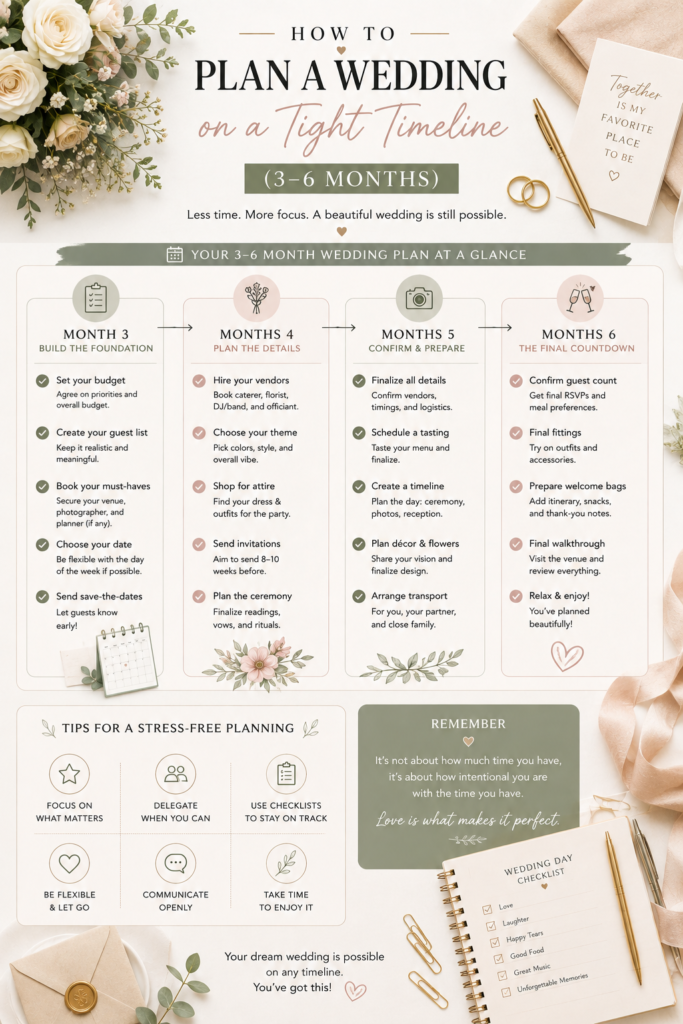
Most wedding planning content assumes a comfortable twelve-to-eighteen-month runway, which is genuinely helpful advice for couples with that kind of time — but considerably less useful for the many couples planning within a much tighter window of three to six months, whether by choice, circumstance, or simply because that timeline suits their situation better than a longer engagement would.
A shorter timeline does not mean a lesser wedding. It means a different planning process — one built around rapid, decisive choices, a ruthlessly prioritized list, and a genuine acceptance that some things will simply not be possible within the compressed window, while the things that matter most absolutely can be.
This guide is built specifically for a 3–6 month engagement, covering exactly what to prioritize, what to reasonably let go of, and how to move through the planning process efficiently without it becoming an overwhelming sprint.
The Fundamental Shift: Decisions Made Quickly, Not Slowly
The single biggest adjustment required for a short-timeline wedding is the pace of decision-making itself. With a longer engagement, couples can take weeks to compare venues, months to decide on a dress, extended time to interview multiple photographers. A short timeline requires collapsing this decision-making window considerably, which means accepting a genuinely different, faster process rather than attempting the same deliberative pace within less available time.
This is not about making worse decisions — it is about making good decisions more efficiently, with less exhaustive comparison shopping and more trust in your immediate, informed instincts once you have done reasonable research.
Week One: The Foundational Decisions
Set your date, ideally with some flexibility. If your venue or key vendors have specific availability, being open to a few different possible dates within your target window significantly expands your options within a tight timeline.
Set your realistic budget. With less time for costs to be spread out or saved toward gradually, get a clear, honest figure established immediately, since this will shape every subsequent decision.
Set a firm, realistic guest count. A smaller guest list is one of the most effective ways to make a short timeline considerably more manageable, since it reduces the complexity of catering, venue capacity requirements, and overall logistics significantly.
Book your venue immediately, prioritizing availability within your date range over an exhaustive comparison process. With a compressed timeline, venue availability becomes the primary constraint most other decisions will need to work around. Move quickly here above all else.
Weeks Two to Four: Core Vendors
Book your caterer, ideally through your venue’s in-house or preferred vendor list if available. Using a venue’s existing catering relationship, rather than sourcing an entirely independent caterer, often saves considerable time in a short-timeline scenario, since the logistics and communication are already established.
Book your photographer, prioritizing availability and a portfolio you genuinely respond to over an extensive vetting process. A brief video call or a focused review of their portfolio and reviews is generally sufficient to make a confident decision within a compressed timeline.
Book music, whether a DJ or smaller live act, based on straightforward availability for your date. With less time available, prioritize confirmed availability over an extensive search for a specific, highly sought-after option.
Order your dress or suit immediately, choosing options with faster turnaround times. Many bridal shops and formalwear providers offer expedited options specifically for shorter timelines; be upfront about your date when shopping so you are shown only genuinely available options.
Book hair and makeup, and secure a trial appointment as soon as possible. With less lead time, book earlier rather than comparing extensively, and use the trial itself to make final decisions about your look.
What to Deliberately Simplify or Skip Within a Short Timeline
Extensive custom stationery. Digital invitations, simpler printed options, or a wedding website serving as your primary information hub all save considerable time compared to elaborate custom-designed stationery with a longer production timeline.
A long guest list requiring extensive RSVP tracking time. A smaller, more intimate guest list is not a compromise within a short timeline — it is often a genuinely better fit, reducing logistics considerably across catering, seating, and overall coordination.
Elaborate, highly custom floral designs. Simpler, seasonally available florals, sourced through your venue’s existing florist relationships if available, considerably reduce both cost and the extended lead time that highly custom floral design typically requires.
A long, multi-event wedding weekend. A single-day celebration, rather than a rehearsal dinner, wedding day, and post-wedding brunch spread across several days, is considerably easier to coordinate within a compressed planning window.
Extensive DIY projects. While appealing for cost reasons, DIY elements typically require considerably more time than anticipated. Within a short timeline, purchasing ready-made alternatives for anything beyond very simple projects is usually the more realistic choice.
Weeks Four to Eight: Details and Confirmation
Finalize your guest list and send invitations, using expedited shipping or a digital format if timing is tight. With less time for the traditional invitation-to-RSVP window, consider a shorter RSVP deadline than a longer-timeline wedding would typically use, and follow up directly with any slow responders sooner rather than waiting extensively.
Confirm all vendor details and payment schedules in writing. With less time for gradual, staged payments spread across many months, confirm exactly what payment schedule each vendor requires given your compressed timeline, since some vendors may require faster or different payment structures for short-notice bookings.
Arrange your marriage license and any required legal documentation early. Legal requirements vary by location, and some jurisdictions have specific waiting periods or documentation timelines that need to be accounted for well before your date, particularly important to check immediately given your compressed overall schedule.
Book any necessary accommodation for out-of-town guests, or communicate options clearly on your wedding website. With less advance notice for guests to arrange travel, providing clear, easily accessible information early helps guests plan around a shorter lead time than they might otherwise expect.
Weeks Eight to Twelve (Final Weeks): Execution
Confirm every vendor directly, one final time, closer to your date than a longer-timeline wedding might require. Given the compressed booking process, an extra confirmation check specifically verifying all details closer to the day provides useful reassurance that nothing was miscommunicated during the faster initial booking process.
Build your day-of timeline with realistic buffer time. A short-timeline wedding benefits particularly from buffer time built into the day’s schedule, since there has been less time overall for extensive rehearsal and refinement of logistics compared to a longer planning process.
Delegate specific day-of responsibilities clearly to trusted people. With potentially less time to have built an extensive support network specifically for wedding logistics, being explicit and direct about who is handling what on the day itself matters considerably.
Making Peace With What a Short Timeline Genuinely Requires
Accept that some vendors or venues, particularly highly sought-after ones, may simply not be available within your window. This is a realistic constraint, not a failure of planning effort. Focus your energy on genuinely available options rather than pursuing vendors whose booking calendars do not accommodate a short-notice timeline.
Recognize that a smaller, simpler wedding within a tight timeline is not a lesser wedding. Some of the most genuinely joyful weddings are intimate, simply executed celebrations planned relatively quickly, precisely because the compressed timeline naturally discourages excessive complexity in favor of focusing on what matters most.
Communicate your timeline honestly with vendors from your very first contact. Being upfront about your compressed schedule allows vendors to tell you immediately whether they can genuinely accommodate your needs, saving considerable time compared to an extended conversation that ultimately reveals a scheduling mismatch.
A Condensed Priority Order for a 3–6 Month Timeline
If your timeline is genuinely tight, prioritize your decisions roughly in this order, moving through each as quickly as reasonable confidence allows:
- Date and budget
- Guest count
- Venue
- Caterer
- Photographer
- Attire
- Music
- Hair and makeup
- Invitations and stationery
- Florals and decor
- Final details and confirmations
This order reflects which decisions most significantly constrain everything that follows, prioritizing them accordingly within your limited available time.
Using a Dedicated Tracker for a Fast-Moving Timeline
Given the compressed pace of decision-making a short timeline requires, a clear, organized tracking system becomes even more valuable than in a longer engagement, since there is considerably less time to recover from a missed deadline or a forgotten detail. A wedding planner with a condensed timeline template and consolidated vendor and payment tracking helps ensure nothing falls through the cracks despite the faster overall pace. Elabrille’s wedding planning bundle works well for exactly this kind of fast-moving planning process, providing the same organizational structure as a longer-timeline wedding, simply compressed into a shorter, more urgent schedule.
Pulling It All Together
Planning a wedding within three to six months requires a genuinely different approach than a longer engagement — faster decisions, a ruthlessly clear priority order, and honest acceptance of what simply is not realistic within a compressed timeline. None of this means a lesser celebration. It means a more focused one, built around what genuinely matters most to you as a couple, executed efficiently rather than exhaustively deliberated.
Move quickly on your foundational decisions. Simplify deliberately where a shorter timeline calls for it. Communicate your timeline honestly with every vendor from the start. And trust that a wedding planned with focus and clarity, even within a tight window, can be every bit as meaningful as one planned over eighteen months.
Frequently Asked Questions
Is it realistic to plan a wedding in 3 to 6 months?
Yes, entirely — though it requires a faster, more decisive planning process than a longer engagement. Prioritizing your foundational decisions quickly, being flexible on date and vendor selection where possible, and deliberately simplifying certain elements are what make a short timeline genuinely achievable.
What should I prioritize first when planning a wedding on a short timeline?
Set your date, budget, and guest count first, since these decisions constrain everything that follows. Book your venue immediately afterward, prioritizing availability within your target window over an extensive comparison process, since venue availability is typically the primary constraint in a compressed timeline.
What should I skip or simplify when planning a wedding quickly?
Consider simplifying elaborate custom stationery, extensive DIY projects, highly custom floral designs, and multi-day wedding weekend events. A smaller guest list also significantly reduces the overall complexity and time required across catering, seating, and general coordination.
Will vendors work with me on such short notice?
Many will, particularly if you communicate your timeline honestly from your very first contact and remain flexible on specific dates or details where possible. Some highly sought-after vendors may not have availability within a short window, which is a realistic constraint rather than a planning failure — focus your energy on genuinely available options instead.
How do I stay organized when everything is moving so quickly?
A consolidated tracking system for vendors, payments, and your timeline becomes even more important with a compressed schedule, since there is less time to recover from a missed detail. Confirm details in writing immediately after each vendor conversation, and do a final confirmation check with every vendor closer to your date to catch any miscommunication from the faster initial booking process.