
Introduction
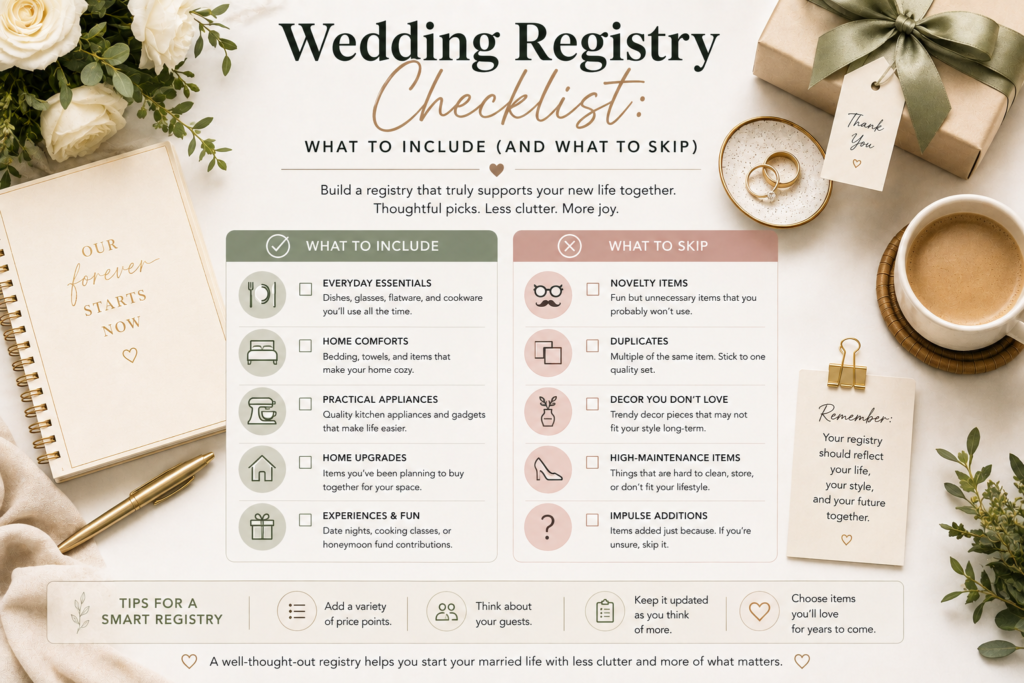
Building a wedding registry sounds like it should be one of the more enjoyable parts of wedding planning — walking through a store or scrolling through a website, scanning items into an ever-growing list of things you would genuinely like to receive. In practice, it often becomes surprisingly overwhelming, caught between conflicting advice, uncertainty about what you actually need versus what simply looks appealing in the moment, and the awkward tension of trying to give guests meaningful options across a wide range of budgets.
A thoughtful registry is not simply a long list of desired items. It is a genuinely useful tool that helps you start your shared life together with what you actually need, while giving your guests a clear, appreciated way to contribute to that beginning. This guide covers exactly what a well-built registry should include, what most couples regret registering for, and how to approach the process without it becoming its own source of decision fatigue.
Registry Essentials by Category
Kitchen and Cooking
A quality set of everyday cookware, cutting boards, a good knife set, and basic bakeware form the genuine foundation most households use regularly. Beyond the basics, consider items specific to how you actually cook — a stand mixer if you bake often, a specific pan type for a cuisine you frequently prepare, rather than defaulting to generic items you may not genuinely use.
Dining and Entertaining
Everyday dinnerware for daily use, plus a smaller set of more formal dinnerware if you anticipate hosting or entertaining regularly. Glassware covering your genuine daily needs — water glasses, wine glasses if relevant to your lifestyle — and basic serving pieces for the kind of entertaining you actually expect to do.
Bedroom and Bath
Quality bedding, including sheets in the sizes your actual bed requires, and a good set of towels. These are items with genuinely high daily-use value that many couples underestimate when building their initial registry, often continuing to use lower-quality versions from before the wedding simply because better ones were never prioritized on the registry.
Home Essentials
Basic small appliances relevant to your actual routine — a good coffee maker or kettle if this is part of your daily habit, a reliable vacuum if this was not already owned separately by either partner before combining households.
Experiences and Contributions
An increasingly common and genuinely valuable registry category: contributions toward a honeymoon fund, a home down payment fund, or specific experiences you want to prioritize together. For couples who already have established households, this category often provides considerably more genuine value than additional physical items.
What Many Couples Regret Registering For
Highly specific, single-use kitchen gadgets. Items designed for a very narrow purpose — a dedicated egg poacher, a specialized slicer for one specific food — are frequently used a handful of times before being relegated to a rarely opened cabinet. Unless you genuinely, consistently use this specific type of item already, consider skipping it.
Overly formal dinnerware if your actual lifestyle rarely calls for formal entertaining. Many couples register for an extensive formal dinnerware set based on an idealized vision of future entertaining that does not reflect their actual, ongoing lifestyle, resulting in an expensive set used only rarely, if ever.
Duplicate items either partner already owns in good condition. Before registering for standard household items, take genuine inventory of what you are each bringing into the shared household. Registering for items you do not actually need, simply because they are traditional registry categories, results in genuine waste.
Items chosen primarily because they were popular registry choices for other couples, rather than genuine personal fit. A registry built by closely following what seems to be generally popular, rather than reflecting your specific household’s actual needs and habits, often results in items that do not genuinely suit how you actually live.
An excessive number of items in a very narrow price range. A registry weighted almost entirely toward either very expensive or very inexpensive items can make gift-giving genuinely difficult for guests with different budget considerations. A thoughtful range across price points serves your guests better than a registry clustered at one extreme.
Building a Registry That Genuinely Serves You Both
Take Honest Inventory Before You Start
Before browsing registry options, walk through your current household items together and identify genuine gaps — what is worn out, what is missing, what you have been meaning to upgrade. This grounds your registry in actual need rather than aspirational browsing.
Register Across a Genuine Range of Price Points
Include items at multiple price levels, from smaller, more affordable options to a few larger, higher-value items. This genuinely serves your guests, who have different budget considerations, and ensures your registry remains accessible regardless of individual guest circumstances.
Register for More Items Than You Expect to Receive
A registry with only exactly as many items as your guest count can leave later guests with very limited options once earlier gifts have already been claimed. A more generous registry, with meaningfully more items than your expected number of gifts, keeps genuine choice available throughout your entire engagement period.
Consider Registering at More Than One Retailer if It Genuinely Serves Different Needs
Some couples register at a single store for simplicity; others use multiple registries to access different specific product categories or brands. Choose based on genuine convenience for both you and your guests, rather than assuming either approach is inherently correct.
Update Your Registry Periodically as Your Needs Become Clearer
As you move through wedding planning and, in some cases, begin actually combining households before the wedding itself, revisit your registry periodically to remove items that no longer feel relevant and add ones that reflect newly identified genuine needs.
Handling the “We Already Have Everything” Situation
For couples who have lived together for some time and already own most typical registry items, a traditional registry can feel genuinely unnecessary or even slightly forced.
Consider a primarily experience or contribution-based registry. A honeymoon fund, a home improvement project fund, or specific meaningful experiences can provide guests a genuine way to contribute without requiring an extensive list of physical items you do not actually need.
Register for genuine upgrades rather than entirely new items. Even an established household often has room for upgraded versions of frequently used items — better cookware, higher-quality bedding — providing guests genuine options without requiring you to accumulate entirely unnecessary new possessions.
Be honest in your communication, whether directly or through your wedding website, about your specific situation. Guests generally appreciate clear guidance, and being upfront that you are prioritizing experiences or specific upgrades over an extensive traditional registry helps guests navigate their gift-giving with genuine confidence rather than uncertainty.
Communicating Your Registry to Guests
Include registry information clearly on your wedding website, rather than directly on printed invitations. Traditional etiquette generally avoids including registry details directly on formal invitations; a wedding website provides a natural, easily accessible place for this information instead.
Update guests if your registry changes significantly as your wedding approaches. If you add substantial new items or shift your registry’s overall focus, a brief update through your wedding website or a note to your wedding party helps ensure guests are working from current, accurate information.
Thank guests specifically for registry gifts in your post-wedding thank-you notes. Mentioning the specific item received, rather than a generic thank-you, is generally appreciated and reflects genuine acknowledgment of the thought behind the gift.
Tracking Your Registry Alongside Your Broader Wedding Planning
Keeping a record of what has been registered for, what has already been purchased by guests, and any registry updates over time helps prevent both awkward duplicate gifts and confusion as your wedding approaches. This tracking pairs naturally with your broader gift and thank-you note tracking, allowing you to manage the full gift-giving process — from registry through to thank-you notes — within a single, connected system. Elabrille’s wedding planning bundle includes registry and gift tracking pages designed specifically to keep this process organized alongside your other wedding planning tasks.
Pulling It All Together
A thoughtful wedding registry is not simply an extensive wish list — it is a genuine reflection of what you and your partner actually need as you begin your shared life together, presented in a way that gives your guests meaningful, accessible options for contributing to that beginning. Take honest inventory of your actual needs before browsing. Register across a genuine range of prices. Consider experience-based options if you already have an established household. And communicate clearly with your guests throughout.
Avoid the common trap of registering for items chosen simply because they are traditional categories or because other couples’ registries seemed to include them. A registry that genuinely reflects your specific life together serves both you and your guests considerably better than one built on generic assumption alone.
Frequently Asked Questions
What are the most important items to include on a wedding registry?
Genuine household essentials that will see regular, daily use — quality cookware, bedding, towels, and basic dinnerware — tend to provide the most lasting value. Beyond these essentials, register for items that reflect how you actually live and cook, rather than defaulting to generic, traditional registry categories that may not genuinely suit your household.
What do couples most commonly regret registering for?
Highly specific, single-use kitchen gadgets, overly formal dinnerware for couples who rarely entertain formally, and duplicate items either partner already owns are among the most commonly regretted registry choices. These items are frequently used rarely, if at all, after the initial excitement of receiving them.
Should I register for experiences instead of physical items?
This can be an excellent option, particularly for couples who already have an established household with most typical registry items already covered. A honeymoon fund, home improvement contributions, or specific meaningful experiences provide guests a genuine way to contribute without requiring an extensive list of unnecessary physical items.
How many items should I include on my registry?
A more generous registry keeps genuine options available throughout your full engagement period.
Where should I share my wedding registry information with guests?
Your wedding website is the most appropriate place for registry information, rather than including it directly on formal invitations, which traditional etiquette generally advises against. A wedding website provides an easily accessible, natural place for guests to find this information when they are ready to select a gift.